The Virginia Demarcation Line Explained
In the Commonwealth of Virginia, the division between public utility infrastructure and private customer property is governed by the Virginia State Corporation Commission (SCC) Utility Consumer Services regulations. The legal demarcation point is the outlet fitting of the natural gas meter.
The utility owns the gas main in the street, the service lateral, the shutoff valve, the pressure regulator, and the meter body. Everything downstream of the final brass or iron union on the meter—including the pipe entering your basement, internal manifolds, and appliance branch lines—is the homeowner's private property.
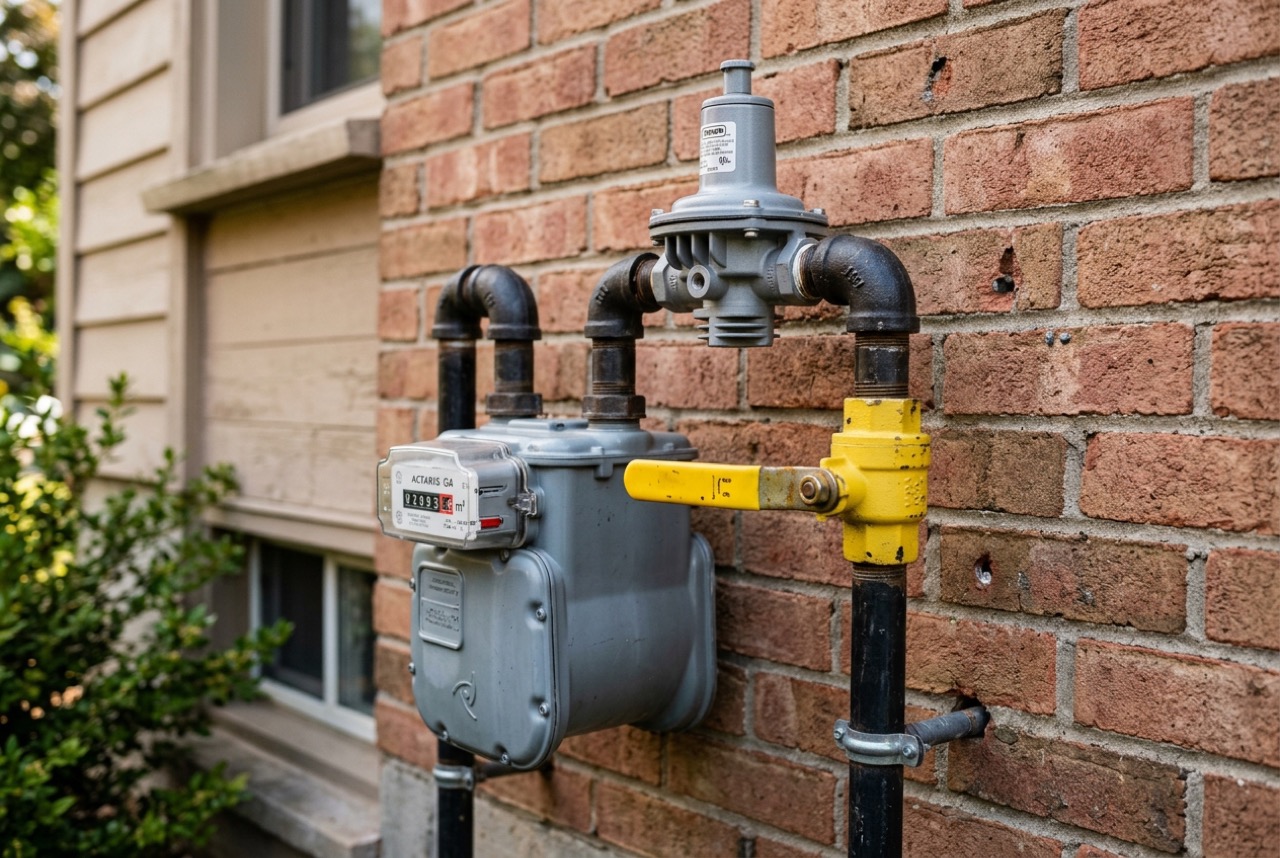
Meter Riser & Valve Operation Schematic
This technical diagram illustrates the precise physical boundary between utility-owned supply lines and customer-owned interior piping:
Residential Gas Meter & Emergency Shutoff Valve Operation
Cutaway showing utility supply riser, quarter-turn emergency valve (parallel = open, perpendicular = closed), regulator, and customer fuel piping.
What Gas Utilities Will and Will NOT Fix
What the Utility Repairs:
- Gas leaks on the street main, service lateral, or meter riser
- Faulty or sticking exterior shutoff valves
- Failed pressure regulators (gas blowing out of regulator relief vent)
- Damaged or malfunctioning meter indexing dials
What the Utility Will NOT Repair:
- Leaking threaded joints or CSST lines inside the home
- Appliance shutoff valves, flex connectors, or burner controls
- Customer-owned underground yard lines (pool heaters, fire pits, generators)
- In-house air pressure testing or plumbing code certifications
Meter Relocations & Service Line Upgrades
If you are adding a major home addition, building a deck that encroaches within 3 feet of your gas meter, or installing a high-demand whole-house standby generator (22kW+) that exceeds your meter's 250 CFH rating, you must submit a Service Alteration Request directly to Washington Gas. Washington Gas charges a engineering and construction fee to upgrade the meter body or extend the outdoor service lateral.
Consumer Protections & Winter Disconnection Rules
Under Virginia Administrative Code (20 VAC 5-305), natural gas utilities cannot disconnect residential customers for billing disputes during freezing weather (when forecast temperatures are below 32°F within 24 hours), or if a serious medical condition is certified by a physician. However, safety shutoffs for active gas leaks are NOT subject to weather restrictions—the utility must shut off any hazardous condition immediately.
Need Code-Compliant Piping Repairs? Contact Ashburn Gas Response at (703) 312-2655. We handle customer-side gas piping repairs, Loudoun County permits, and Washington Gas unlock certifications.